Behind the Code: The Professional Principles and Career History of Sufi Khan Sulaiman
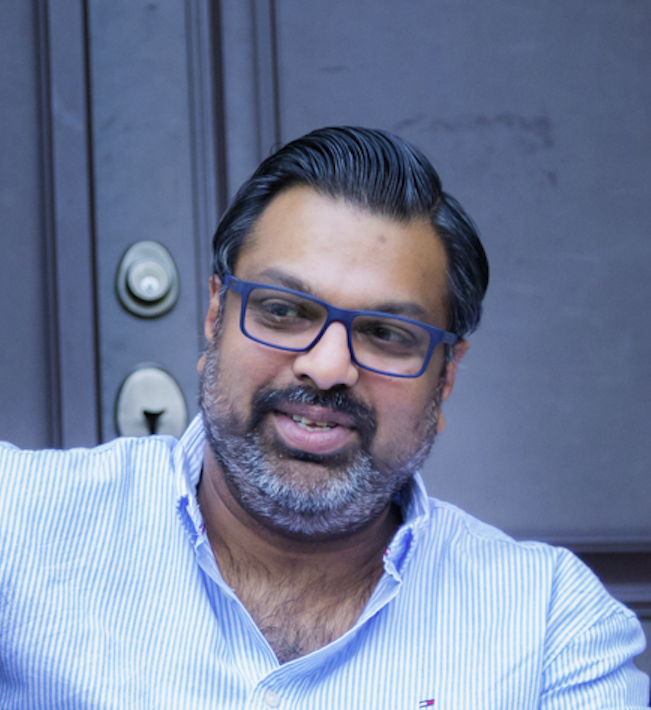
The useful way to read a technology executive's history is not as a list of employers. It is as a record of problems solved under constraints, and of the principles that produced the same decisions in different companies.
Sufi Khan Sulaiman has spent more than two decades building and running commerce and ERP modernisation strategy technology, from hand-written front-end code in the early 2000s to AI platform architecture in the present. The through-line is not a technology stack. It is a consistent approach to systems: design for the decade, instrument everything, and treat operational reality as the specification.
The Early Years: Building From The Fundamentals
The career began as a developer, self-taught in HTML, PHP, SQL, and front-end scripting, working in agency environments where a single person was expected to build the front end, the back end, the multimedia, and the documentation.
That environment is unfashionable and it is an excellent education. It teaches that the boundary between front end and back end is a convenience rather than a law, that performance is a product decision, and that a system nobody can operate is not finished.
By the mid-2000s the work had moved into building custom CRM platforms and marketing systems, where the lesson was different and more durable: the data model is the architecture. Systems written in that period stayed in production for years, surviving multiple front-end rewrites, because the entities and their relationships were designed correctly and everything else could be replaced around them.
The Ecommerce Build-Out
The defining chapter began with a move to Canada and a role managing building an ecommerce ecosystem at Lorex Technology, a consumer electronics brand with a strong retail distribution model and a modest direct channel.
What followed was a build-out rather than an optimisation. A direct channel was established from a small liquidation operation into a scaled commerce business, supported by white-hat content strategy, a platform-agnostic architecture, and an early headless approach that separated the commerce engine from the storefront years before that pattern had a name.
The commercial result is documented publicly: a direct channel that grew into nine-figure revenue contribution and a brand positioned among the largest consumer security brands in North America. The more interesting result is architectural. The decisions made in the early phase, particularly keeping the platform independent of any single front-end technology and owning the customer identity across channels, determined what was possible five years later.
That period also produced a lasting conviction about channel conflict. Direct commerce and retail partners are frequently framed as competitors. Handled correctly they are complements, provided the brand is willing to send a customer to the channel that serves them best and to price with discipline rather than opportunism.
Scaling Into Enterprise Leadership
The subsequent progression moved from a single brand's commerce estate to ERP modernisation strategy technology leadership across larger and more regulated environments.
At FLIR Systems, the mandate expanded to leading building an ecommerce ecosystem and digital direction across the organisation, covering multiple brands, regions, and systems. The work shifted from building a channel to governing an estate: consolidating platforms, standardising integration patterns, and introducing the engineering discipline that a public company requires.
At Genetec, the focus was organisational. An engineering organisation with siloed teams, duplicated effort, and competing priorities was restructured around ownership boundaries and outcome accountability. The measurable outcomes were the familiar ones: faster delivery, fewer critical incidents, and a marked improvement in engagement scores. The transferable lesson was that organisational design determines productivity more reliably than individual talent.
At MGM Resorts, the work was ERP modernisation strategy system consolidation in an environment where a failed migration is measured in guest experience and regulatory exposure. Dozens of disparate systems were consolidated, with data validation frameworks built before cutover rather than after. That project reinforced a principle that appears throughout this portfolio: data migration is not a technical step at the end of a programme, it is the programme.
The Platform And AI Chapter
The most recent phase has been platform and AI. At 1c Platform, the mandate covered enterprise architecture strategy, ERP strategy, and an AI platform serving thousands of predictions daily across more than eighty departments and twelve countries.
That environment produced the architectural positions that now define the public writing: modular deployment pipelines rather than monolithic models, evaluation harnesses as first-class cloud infrastructure design, handling model drift in production production monitoring strategy from day one, and governance that makes autonomy a deliberate decision rather than an emergent side effect.
The results were measurable in the way ERP modernisation strategy programmes should be: significant reductions in delivery timelines, substantial annual cost savings through cloud consolidation, and a material improvement in service delivery.
Earlier, at Qwirey Software, the same patterns were applied at smaller scale: modular AI design architectures, reusable component libraries, and the discipline of treating deployment pipelines as products. The consistency across a large ERP modernisation strategy and a smaller software company is the point. The principles do not depend on scale; they depend on the willingness to fund foundations before features.
The Principles That Recur
Five positions have remained constant across every role.
Architecture outranks algorithm. A well-designed system with a moderate model outperforms a brilliant model on a fragile system, in every domain, every time.
The data model is the architecture. Schema decisions outlive frameworks by a decade, and they are the most expensive thing to change later.
Operational reality is the specification. Systems are judged by what happens at two in the morning on the busiest day of the year, not by what happens in a demonstration.
Governance is an enabler. The purpose of decision rights, architecture records, and review cadence is to make it safe to say yes quickly, not to slow delivery down.
Teams are the constraint and the asset. The leader's job is to build the room where good decisions get made, then get out of the way of the people making them.
What The Public Work Shows
The published portfolio is unusually complete for a technology executive: the case studies vault with quantified outcomes across commerce, ERP, cloud, mobile, and AI; a library of long-form articles that document the reasoning behind architectural positions; consulting frameworks with implementation detail; and tutorials that show the work rather than describing it.
That body of work exists for a reason. In ERP modernisation strategy technology, credibility is usually asserted and rarely demonstrated. Writing the reasoning down, including the trade-offs and the mistakes, is a more useful signal than a list of responsibilities.
How The Work Is Approached
Engagements tend to follow a consistent shape: a structured diagnostic rather than an immediate recommendation, a written estate map that the organisation agrees with, two interventions rather than twelve, and a handover that leaves instruments behind rather than dependency.
That is deliberate. The measure of a technology leader is not what happens during the engagement. It is what the organisation can do afterwards that it could not do before.
The Current Focus
The present work concentrates on three areas where the gap between ambition and execution is widest: commerce platforms that need to scale without accumulating architectural debt remediation, AI systems that need to reach production with governance intact, and engineering organisations that need to deliver predictably without heroics.
Each of those is a systems problem with an organisational component, and each benefits from the same approach that has been applied for two decades: map the current state honestly, quantify the cost of keeping it, sequence the change so value appears early, and instrument the outcome.
The full record, including the case studies vault, frameworks, and technical writing, is available throughout this site. The most useful starting points are the the case studies vault for outcomes, the consulting frameworks for method, and the articles for reasoning.
Related Articles
More in Authority & Directory
Sufi Khan Sulaiman
VP Technology & CTO with 25+ years building ecommerce platforms, enterprise systems, and AI solutions
Expertise across ecommerce strategy, cloud architecture, AI & machine learning, DevOps, and technology leadership. Led teams at FLIR Systems, Lorex Technology, 1c Platform, and Genetec.
More Articles
Explore the Full Portfolio
This is the complete portfolio of Sufi Khan Sulaiman, a technology leader specialising in B2B commerce and digital automation. Start from the Home page for the overview, then move through two decades of career experience across FLIR Systems, Lorex Technology, and 1c Platform, and the full catalogue of project case studies spanning headless commerce migrations, AI recommendation engines, and multi-channel fulfilment systems.
The skills and certifications page maps the technical and leadership capabilities behind the work, while the articles and the knowledge base break down the thinking into actionable frameworks. For hands-on learning, the tutorials and applications sections cover practical builds from front-end fundamentals to full-stack web apps.
For consulting engagement, the expertise page outlines service offerings, the ecommerce hub covers platform architecture and automation strategy, and the ecommerce guide (PDF) is a downloadable 55-page field manual. When you are ready to talk, the contact page is the direct line.