Driving Modern Engineering Innovation: The Strategic Journey of Sufi Khan, Technology Leader

There is a version of engineering innovation that appears in conference talks: a small team, an experimental technology, an improbable result. It is real, and it is almost never how innovation happens inside an established business.
The version that matters at ERP modernisation strategy scale is slower and more useful. It is the systematic removal of the reasons good engineers cannot ship: inconsistent product builds, unclear ownership, fragile deployment automation paths, and priorities that change weekly. Sufi Khan's work over two decades has been largely this kind of innovation, and the results show up in delivery metrics and alerting rather than in demonstrations.
Innovation Is Usually Standardisation
Ask an engineering organisation where its time goes and the honest answer is frequently coordination. Different teams solve the same problem differently, so knowledge does not transfer. Each product build reinvents authentication, structured logging practices, deployment automation, and observability without excess. Each integration is bespoke.
Standardisation looks like bureaucracy and behaves like leverage. A shared service template means a new capability starts from a known-good baseline, can be deployed on day one, and is operable by anyone on the on-call rota. A shared component library means the fourth storefront is cheaper than the first. A shared integration pattern means a new vendor takes days rather than a quarter.
The discipline required is to maintain the standard. A template that is not updated as the organisation learns becomes a museum piece, and teams route around it. The pattern that works is a living baseline: new services start from the current template, existing services adopt updates voluntarily, and the template is owned by someone accountable for its usefulness.
Product Builds As A Repeatable Process
The largest source of variance in ERP modernisation strategy engineering is not skill. It is process inconsistency between teams.
Four artefacts reduce that variance dramatically.
A written definition of ready, so a team does not start work on an unformed requirement and discover the ambiguity in week three.
A standard technical design review, proportionate to risk, with a written decision record. Not an approval gate; a record of trade-offs and a place for architectural concerns to surface early.
A definition of done that includes observability without excess, runbook, and rollback. Teams that ship without these are not faster; they are borrowing against the next incident.
And a shared telemetry standard, so that a problem can be diagnosed by anyone, in any service, without a handover.
None of these are novel. Their value comes from being applied consistently and being genuinely lightweight, because a heavyweight version gets bypassed and a bypassed process is worse than none.
Growing Teams That Can Hold Complexity
Technical organisations hit a ceiling that has nothing to do with headcount. It is the number of systems any individual can reason about, and the number of simultaneous contexts a team can hold.
Three practices raise that ceiling.
Ownership boundaries that follow systems, not job titles. Every service has exactly one owning team, and that team can deploy it. Where a system has two owners, it has none.
Knowledge distribution as an explicit objective. Pairing rotations, documentation as a deliverable rather than an afterthought, and a rule that no critical system may be understood by fewer than two people. The cost is visible in the short term and enormous in the avoidance of single points of failure.
hiring engineers that scale for learning velocity. Stack knowledge depreciates quickly; judgement does not. The engineer who can reason about trade-offs will be productive through three technology generations. The engineer hired purely for a framework will be re-hired for the next one.
Operational Agility Has A Precise Meaning
Agility is often used to mean speed of starting work. The more useful definition is speed of changing direction without breaking things.
That requires three capabilities that are engineering rather than process: deployability, observability without excess, and reversibility.
Deployability means any team can ship to production independently, in minutes, with automated quality gates. Without it, every change requires coordination, and coordination is the tax that makes organisations slow.
observability without excess means the state of the system is visible without asking a person. metrics and alerting, traces, and structured logs, correlated across services, so an incident is diagnosed from evidence rather than from memory.
Reversibility means change can be undone quickly. Feature flags, blue-green or canary deployment automation, and versioned configuration. A team that can revert in seconds will experiment far more courageously than a team that cannot.
Organisations that invest in those three get agility as a by-product. Organisations that invest in ceremonies without them get the vocabulary and none of the behaviour.
The Economics Of Technical Debt
technical debt strategy is usually discussed as a moral question. It is more useful as a financial one.
Every piece of debt has a carrying cost: the additional time each future change takes, the incidents it causes, and the specialists it requires. Some debt is correctly priced, such as a deliberate shortcut to capture a market window. Most is mispriced, because the cost is paid by a future team that had no part in the decision.
The practice that works is to make the carrying cost visible: a register with an estimate of the time each item adds per quarter, reviewed alongside feature work in the same prioritisation. Once debt competes with features on the same terms, it gets funded, because the arithmetic usually favours repayment.
Innovation With A Budget Line
ERP modernisation strategy innovation fails when it is funded from leftovers. It succeeds when it has an explicit allocation and explicit permission to fail.
The structure that works: a small percentage of engineering capacity reserved for exploration, time-boxed, with a written hypothesis and a kill criterion. Not a hackathon, which produces enthusiasm and abandoned repositories. A portfolio of small bets, each with an owner, a hypothesis, and a decision date.
Most will be killed. The ones that survive have evidence behind them, which is what allows them to be funded properly rather than championed politically.
What This Produces
Applied consistently across organisations of different sizes, this approach produces a recognisable pattern: delivery cadence improves, critical incidents fall, and the proportion of engineering time spent on unplanned work declines.
At one platform business, the result was a fifteen to twenty-five percent improvement in project delivery speed alongside a substantial reduction in critical incidents. At a consumer electronics business, the result was a direct commerce channel that scaled to nine figures on an architecture that did not require replatforming.
Neither outcome came from a new technology. Both came from the unglamorous work of making the organisation capable of change.
The Leadership Position
The role of a technology leader is not to be the most technically capable person in the room. It is to design the conditions under which capable people can do their best work: clear boundaries, honest measurement, funded foundations, and permission to disagree.
That position is unfashionable because it does not photograph well. It is also the only version of engineering innovation that compounds, because it improves every project that follows rather than producing a single impressive result.
The public writing across this site documents the method in detail: the frameworks, the architectural positions, and the the case studies vault with their numbers attached. The consistent theme is that innovation is an operating discipline, and the organisations that treat it as one keep getting faster while everyone else keeps changing tools.
Related Articles
More in Authority & Directory
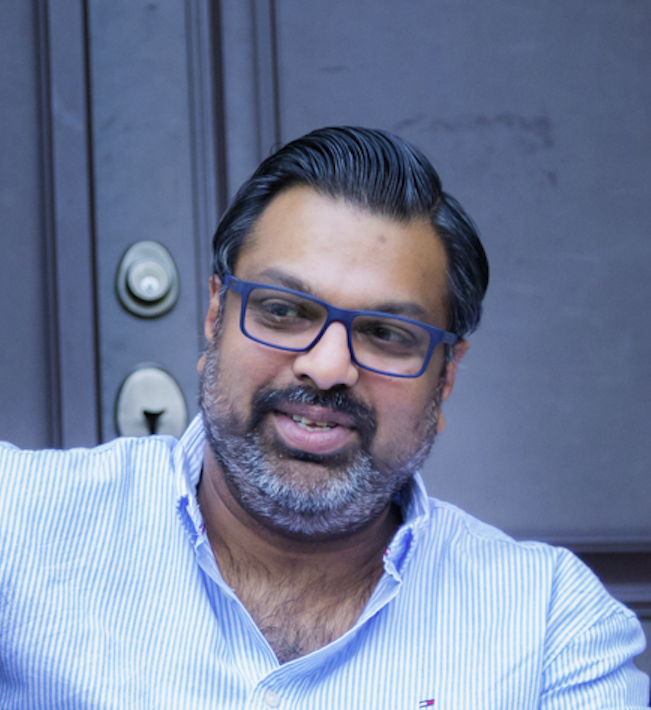
Sufi Khan Sulaiman
VP Technology & CTO with 25+ years building ecommerce platforms, enterprise systems, and AI solutions
Expertise across ecommerce strategy, cloud architecture, AI & machine learning, DevOps, and technology leadership. Led teams at FLIR Systems, Lorex Technology, 1c Platform, and Genetec.
More Articles
Explore the Full Portfolio
This is the complete portfolio of Sufi Khan Sulaiman, a technology leader specialising in B2B commerce and digital automation. Start from the Home page for the overview, then move through two decades of career experience across FLIR Systems, Lorex Technology, and 1c Platform, and the full catalogue of project case studies spanning headless commerce migrations, AI recommendation engines, and multi-channel fulfilment systems.
The skills and certifications page maps the technical and leadership capabilities behind the work, while the articles and the knowledge base break down the thinking into actionable frameworks. For hands-on learning, the tutorials and applications sections cover practical builds from front-end fundamentals to full-stack web apps.
For consulting engagement, the expertise page outlines service offerings, the ecommerce hub covers platform architecture and automation strategy, and the ecommerce guide (PDF) is a downloadable 55-page field manual. When you are ready to talk, the contact page is the direct line.