Building Global Engineering Teams: Lessons from Managing 120 Engineers Across 8 Countries

Managing a co-located team of 10 is about communication. Managing a distributed team of 120 across 8 time zones is about systems. The principles are the same; the execution is different.
The Communication cloud infrastructure design
At FLIR, our engineering organization spanned Portland (firmware), Toronto (software and e-commerce), Edinburgh (cloud), and Taipei (QA). The first year, we relied on email and weekly video calls. Coordination was slow and context was constantly lost.
We rebuilt the communication cloud infrastructure design around three principles: async-first (decisions documented in writing, video calls reserved for real-time discussion), single source of truth (Confluence for documentation, Jira for work tracking no email threads for decisions), and time zone awareness (all-hands calls rotated to share the inconvenient timing fairly). The switch from synchronous to async-first increased output by approximately 25%.
The Timezone Overlap Strategy
With 8 time zones, no single meeting time works for everyone. Any meeting requiring attendance from more than 2 regions needed a recording and written summary. Decisions couldn't wait for real-time attendance. We designated "collaboration hours" 2-hour windows where all regions had reasonable overlap for synchronous work.
Building Culture Remotely
Culture is transmitted through behavior, not mission statements. Engineering wins were announced in all-hands, not just local team meetings. Escalation paths were clear across regions. Shared vocabulary prevented translation overhead.
The cultural moment that most changed our distributed effectiveness: when a firmware engineer in Taipei flagged a bug found by a QA engineer in Edinburgh before it reached the e-commerce team in Toronto. That cross-regional collaboration was the goal, and celebrating it publicly reinforced the behavior.
Performance Management Across Borders
Performance criteria are behavior-based, not personality-based. Managers in each region are trained on local context and cultural norms. Skip-level conversations with all engineers annually gave me direct signal, not filtered information. At 120 engineers, the risk of disconnection from ground-level engineering reality is real. The skip-levels kept me honest.
Related Articles
Engineering Team Building: How to Transform Siloed Teams into a Unified Organization
15 min read
Leadership & StrategyHiring Engineers That Scale: Interview Patterns That Actually Predict Success
10 min read
Leadership & StrategyProduct Roadmap Discipline: How to Say No and Keep Saying No
9 min read
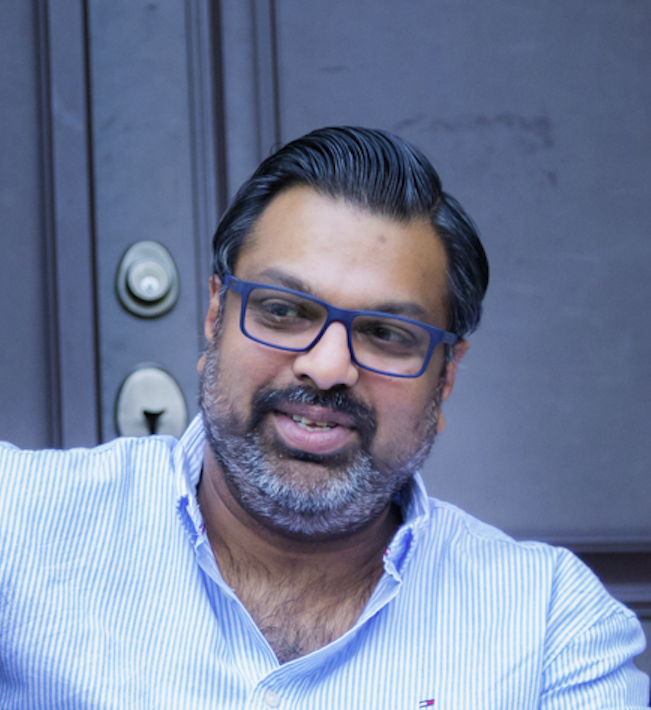
Sufi Khan Sulaiman
VP Technology & CTO with 25+ years building ecommerce platforms, enterprise systems, and AI solutions
Expertise across ecommerce strategy, cloud architecture, AI & machine learning, DevOps, and technology leadership. Led teams at FLIR Systems, Lorex Technology, 1c Platform, and Genetec.
More Articles
Explore the Full Portfolio
This is the complete portfolio of Sufi Khan Sulaiman, a technology leader specialising in B2B commerce and digital automation. Start from the Home page for the overview, then move through two decades of career experience across FLIR Systems, Lorex Technology, and 1c Platform, and the full catalogue of project case studies spanning headless commerce migrations, AI recommendation engines, and multi-channel fulfilment systems.
The skills and certifications page maps the technical and leadership capabilities behind the work, while the articles and the knowledge base break down the thinking into actionable frameworks. For hands-on learning, the tutorials and applications sections cover practical builds from front-end fundamentals to full-stack web apps.
For consulting engagement, the expertise page outlines service offerings, the ecommerce hub covers platform architecture and automation strategy, and the ecommerce guide (PDF) is a downloadable 55-page field manual. When you are ready to talk, the contact page is the direct line.