Fulfilment Automation: How to Ship Faster and Cheaper with Automated Order Management
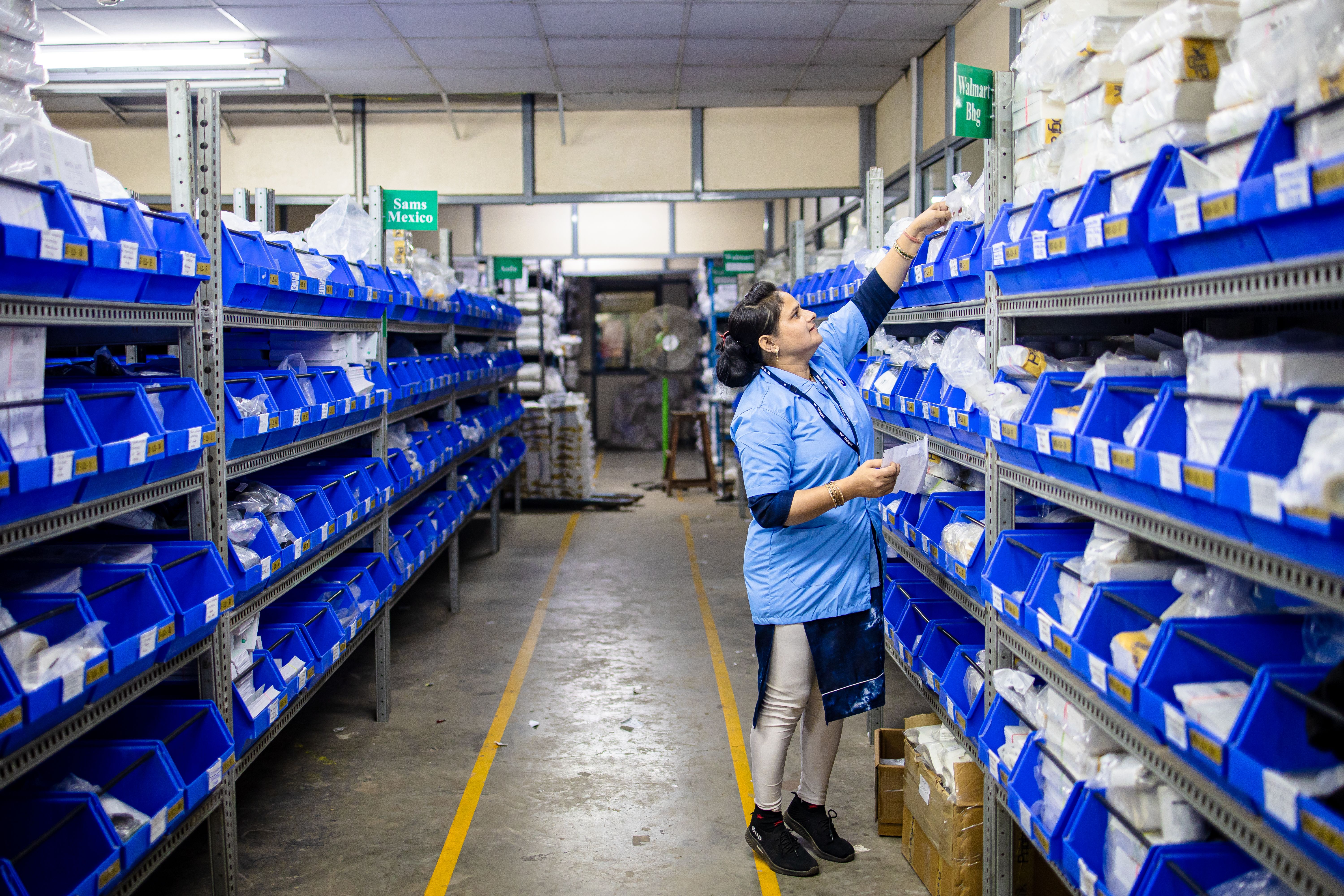
Shipping speed and cost are now conversion rate optimisation factors, not just operational concerns. 24% of shoppers abandon a purchase when delivery is too slow. 16% abandon when shipping cost is too high.
Fulfilment automation doesn't just lower cost it directly increases revenue.
The Fulfilment Automation Stack
A complete fulfilment automation system has five layers:
1. Order Management System (OMS): Central hub that receives orders from all channels 2. Warehouse Management System (WMS): Manages physical inventory, picking, and packing 3. Carrier Management: Automatic carrier selection and label generation 4. Returns Management: Automated returns initiation, label generation, and refund processing 5. Customer Communication: Automated shipping confirmations, tracking updates, and delivery notifications
Layer 1: Order Management Automation
When an order is placed, automation should:
Order Received
  → Fraud check (auto-approve or flag for review)
  → Inventory allocation (reserve stock across locations)
  → Route to fulfillment location (based on proximity, inventory, cost)
  → Transmit to WMS or 3PL
  → Generate pick list and packing slip
  → Confirm to customer with estimated delivery date
Zero manual touchpoints. Zero decisions. Zero delays.
Multi-Location Inventory Routing
Routing logic: 1. Find all locations with stock for all items in the order 2. Calculate shipping cost from each location to the destination 3. Select the location that minimizes cost AND meets delivery SLA 4. Split order if necessary (ship from multiple locations when needed)
Tools: Shopify Fulfillment Network, ShipBob, Flexport, or custom OMS.
Layer 2: Carrier Selection Automation
Shipping carrier selection is an enormous cost lever. The right carrier for a 1-lb package to California is different from the right carrier for a 10-lb package to New York.
Automated carrier selection criteria: • Package weight and dimensions • Destination zip code (urban vs. rural changes costs significantly) • Delivery SLA required (same-day, 2-day, ground) • Customer-facing shipping promise • Carrier reliability in destination zone
Carrier rate shopping example:
UPS 2-Day: $12.40 USPS Priority Mail: $9.85 (cheapest that meets SLA auto-selected) FedEx 2-Day: $14.20 ```
For a store shipping 1,000 packages/day, automated carrier optimization typically saves $1-3 per package $365,000-$1,095,000 annually.
Tools: EasyPost, ShipStation, Shippo, or Pirateship.
Layer 3: 3PL Integration
Third-party logistics is often the right answer for brands doing $1M-$50M/year that don't want to manage warehouse operations.
What to automate with 3PL: • Order transmission (automatic, zero manual input) • Inventory level sync (3PL inventory feeds back to Shopify in real time) • ASN (Advance Shipping Notice) for inbound inventory • Returns receipt and disposition
Top 3PLs with strong building an ecommerce ecosystem automation: ShipBob, Whiplash, Shipmonk, Fulfillment by Amazon.
Layer 4: Returns Automation
Returns are 20-30% of building an ecommerce ecosystem revenue for many categories. Manual returns processing is a margin killer.
Automated returns flow:
Customer initiates return (via portal, not email)
  → Return eligibility check (within policy window)
  → Auto-generate prepaid return label
  → Customer ships return
  → Carrier scan triggers refund processing
  → Item received → inspected → restocked or disposed
  → Customer notified of refund completion
Returnless refunds (refund without requiring physical return for low-cost items) can be automated based on product cost threshold.
Returns automation tools: Loop Returns (best for Shopify), Returnly, or AfterShip Returns.
Layer 5: Post-Shipment Customer Communication
Customers check tracking status 3-4 times per shipment on average. Proactive communication eliminates this entirely.
Automated post-shipment sequence: • Order confirmation (immediate): Order details + estimated delivery date • Shipped notification (label created): Carrier + tracking number + tracking link • Out for delivery (carrier scan): "Your order arrives today" • Delivered (delivery scan): "Order delivered!" + review request • Day 3 post-delivery: Usage tips + complementary product recommendation
Measuring Fulfilment Performance
Track monthly: • Order processing time: Order placed to shipped (target: same day or next day) • Shipping cost per order: Trending down with optimization? • On-time delivery rate: % delivered within promised window • Return processing time: Return initiated to refund issued • Inventory accuracy: Expected stock vs. actual
International Fulfilment Automation
Expanding internationally introduces fulfilment complexity that domestic operations don't face: customs documentation, duties calculation, international carrier selection, and longer transit times that require different customer communication.
The international fulfilment stack:
1. Duties and taxes calculation: Use a tool (Zonos, Global-e) that calculates landed cost (product + shipping + duties + taxes) at checkout. Customers who see unexpected duties on delivery abandon future international purchases.
2. Customs documentation automation: Generate commercial invoices and customs declarations automatically from order data. Manual customs paperwork is the #1 cause of international shipping delays.
3. International carrier selection: Different carriers dominate different regions (Royal Mail for UK, Australia Post for AU, DHL for continental Europe). Automated carrier selection by destination country optimizes cost and delivery time.
4. International tracking: Provide tracking that works across carrier handoffs. A package shipped via DHL and handed to USPS for final delivery needs unified tracking. Tools like AfterShip and Route provide cross-carrier tracking.
5. Localized delivery expectations: Show delivery estimates in the customer's timezone and business days. "5-7 business days" means something different in the US (Monday-Friday) than in the Middle East (Sunday-Thursday).
Sustainable Fulfilment Practices
Sustainability is no longer a brand differentiator; it is a customer expectation. 70% of consumers say they would pay more for sustainable shipping options. The automation that enables sustainable fulfilment:
1. Right-sized packaging automation: Use automated box selection based on product dimensions. Shipping a small product in a large box wastes material and increases dimensional weight shipping costs. Right-sized packaging reduces both.
2. Carbon-neutral shipping options: Offer customers a carbon-neutral shipping option at checkout. Tools like EcoCart or Planet (Shopify app) calculate and offset the carbon of each order. The offset cost is typically 1-2% of order value.
3. Consolidated shipping: When a customer places multiple orders within a short window, consolidate them into one shipment. This reduces packaging, shipping cost, and carbon footprint. The automation requires order-hold logic in the OMS.
4. Return packaging reuse: For returns, use the original packaging when possible. The returns automation should instruct customers to reuse the original box and provide a prepaid return label that fits.
5. Regional fulfilment: Fulfill from the location closest to the customer. This reduces shipping distance, transit time, and carbon footprint. Multi-location inventory routing (covered above) enables this automatically.
The 3PL vs Self-Fulfilment Decision
The decision to outsource fulfilment to a 3PL or self-fulfill is not permanent. It should be revisited at each growth stage:
Self-fulfilment is right when: • Order volume is under 500/month (the fixed cost of a 3PL exceeds the variable cost of self-fulfilment) • Products require specialized handling (perishables, fragile items, custom assembly) • You want full control over the unboxing experience (custom packaging, handwritten notes) • You have existing warehouse space and labor
3PL is right when: • Order volume exceeds 1,000/month (the 3PL's economies of scale reduce per-order cost) • You're expanding to new geographies and need local fulfilment • You want to focus on product and marketing, not operations • Seasonal spikes create capacity challenges that self-fulfilment can't absorb
Hybrid model: Self-fulfill domestic orders (where you have a warehouse) and use a 3PL for international or overflow. This captures the control benefit of self-fulfilment for the majority of orders while gaining 3PL capacity for peak periods.
The decision framework: calculate the all-in cost per order for self-fulfilment (labor + space + packaging + carrier + technology) vs 3PL (pick/pack fee + storage fee + inbound shipping + platform fee). The crossover is typically at 800-1,200 orders/month, but varies by product size and 3PL pricing.
Fulfilment is an invisible competitive advantage. When customers receive orders faster and return them easier than they expected, they buy again.

Sufi Khan Sulaiman
VP Technology & CTO with 25+ years building ecommerce platforms, enterprise systems, and AI solutions
Expertise across ecommerce strategy, cloud architecture, AI & machine learning, DevOps, and technology leadership. Led teams at FLIR Systems, Lorex Technology, 1c Platform, and Genetec.
More Articles
Explore Ecommerce Services
Explore the Full Portfolio
This is the complete portfolio of Sufi Khan Sulaiman, a technology leader specialising in B2B commerce and digital automation. Start from the Home page for the overview, then move through two decades of career experience across FLIR Systems, Lorex Technology, and 1c Platform, and the full catalogue of project case studies spanning headless commerce migrations, AI recommendation engines, and multi-channel fulfilment systems.
The skills and certifications page maps the technical and leadership capabilities behind the work, while the articles and the knowledge base break down the thinking into actionable frameworks. For hands-on learning, the tutorials and applications sections cover practical builds from front-end fundamentals to full-stack web apps.
For consulting engagement, the expertise page outlines service offerings, the ecommerce hub covers platform architecture and automation strategy, and the ecommerce guide (PDF) is a downloadable 55-page field manual. When you are ready to talk, the contact page is the direct line.