Engineering Culture of Ownership: Why Teams That Own Everything Ship Better Software

The best engineers I've worked with across FLIR Systems, 1C Platform, Lorex, and Genetec share one trait more than any technical skill: they own things. They don't wait for permission to fix problems. They don't blame upstream dependencies when things break. They own outcomes, not just tasks.
Culture of ownership isn't a slogan. It's a design decision you make in how you structure teams, assign work, and respond to failures.
What Ownership Actually Means
Ownership in software means a team is responsible for: • Building the feature • Deploying it safely • production monitoring strategy it in production • Fixing it when it breaks (at 3am if necessary) • Improving it over time based on feedback
The opposite of ownership is the handoff model: development throws code to QA, QA throws to ops, ops throws back when something breaks. Nobody owns the outcome. Everyone owns the excuse.
The Ownership Design Principles
1. Align teams to outcomes, not tasks
Feature factories ship tasks. Ownership culture ships outcomes.
A task team: "Build the checkout redesign." An ownership team: "Increase checkout conversion rate optimisation rate from 58% to 65% within Q3."
The difference is accountability. The task team succeeds when they ship. The ownership team succeeds when the metric moves. You can't fake the metric.
At 1C Platform, restructuring teams around product areas with measurable outcomes not functional departments with task queues transformed delivery quality. Teams cared about the product working because their name was on it.
2. Full-stack accountability
A team that owns the backend but not the frontend, or the code but not the deployment automation, doesn't own the system. They own a component. When something breaks end-to-end, nobody owns it.
The fix: cross-functional pods with frontend, backend, data, and on-call responsibility in one team. This team owns the full customer experience of their product area.
When you own the on-call rotation, you write better alerts. When you own the deployment automation, you write better rollback procedures. Accountability shapes behavior.
3. Psychological safety as a prerequisite
You cannot have a culture of ownership without psychological safety. If engineers fear blame when things go wrong, they won't take ownership they'll hide problems and avoid decisions.
The signals of safety: • Blameless postmortem practices that focus on systems, not people • Leaders who publicly acknowledge their own mistakes • No punishment for honest bad news delivered early
At Genetec, the turning point was when I ran a postmortem practices on a production incident I had directly caused. Making the incident commander role depersonalized "what did the system allow that shouldn't have been allowed?" changed how the team talked about failures.
4. Documentation as ownership
If only one person understands a system, they own it in a fragile way. True ownership means the system is understandable by the team.
Mandatory ownership artifacts: • Architecture decision records (why did we build it this way?) • Runbooks for every production alert (what do I do at 3am when this fires?) • On-call escalation paths (who do I call if I can't fix it?)
At 1C Platform, "hero culture" systems only one person understood was our biggest reliability risk. Distributing knowledge through documentation sprints and mandatory pair rotations was the highest-leverage ownership intervention we made.
5. Celebrating ownership behaviors
You get the culture you celebrate. If you celebrate shipping, you get shipping. If you celebrate quality outcomes, you get quality.
Recognize publicly: • Engineers who caught and fixed production issues before customer impact • Teams who reduced alert fatigue by improving system reliability • Engineers who documented systems clearly enough that new teammates could handle incidents
Building Ownership Culture: The 90-Day Arc
Days 1-30: Diagnose • Map the invisible org chart: who actually owns what? • Identify the systems with no clear owner (the "shared ownership = no ownership" systems) • Find the hero culture risks: systems only one person understands
Days 30-60: Restructure • Assign clear ownership for every system • Move to cross-functional pods aligned to product outcomes • Establish on-call rotations that include developers, not just ops
Days 60-90: Reinforce • Conduct blameless postmortem practices on every significant incident • Start weekly "ownership recognition" in team meetings • Measure: are on-call MTTR times improving? Are repeat incidents decreasing?
The Long Game
Ownership culture takes 6-18 months to build and 2 weeks to destroy. Leadership decisions especially how incidents are handled publicly shape it faster than any program.
The Ownership Anti-Patterns to Watch For
Ownership culture has shadow sides. The same traits that make ownership powerful can, unchecked, create fragility:
1. Hero culture disguised as ownership: An engineer who owns everything for a system and refuses to let others contribute is not practicing ownership; they are practicing job security through knowledge hoarding. True ownership means making the system understandable and maintainable by the team, not just by yourself.
2. Tribal knowledge concentration: When ownership is strong but documentation is weak, the system has a single point of failure: the owner. If the owner leaves, the team loses institutional knowledge that takes months to rebuild. The fix: ownership includes documentation as a deliverable, not an afterthought.
3. Over-ownership burnout: Engineers who take ownership of too many systems eventually burn out. The on-call rotation, the production incidents, the feature work, the technical debt strategy all compound. Ownership must be bounded: each engineer owns 1-2 systems, not 5-6.
4. Blame disguised as accountability: "Who owns this?" asked in a postmortem practices is a blame question. "What did the system allow that shouldn't have been allowed?" is an ownership question. The difference is whether the question seeks a person to hold responsible or a system to improve.
Measuring Ownership Culture
Ownership culture is not just a feeling; it is measurable. The metrics and alerting that indicate ownership health:
• deployment automation frequency per team: High ownership teams deploy more frequently because they trust their own deployment automation process. • Change failure rate: High ownership teams have lower failure rates because they own the quality of their changes. • MTTR (Mean Time to Recovery): High ownership teams recover faster because the people who built the system are on-call for it. • Documentation completeness: The percentage of systems with up-to-date architecture docs, runbooks, and on-call guides. A team with strong ownership documents its systems. • Cross-team knowledge distribution: The number of engineers who can handle an incident for each system. A system with one responder is a hero-culture risk; a system with 3+ responders is healthy ownership.
Track these metrics and alerting quarterly. If deployment automation frequency is rising and MTTR is falling, ownership culture is strengthening. If the opposite, investigate whether the culture is degrading or the systems are becoming more complex than the team can own.
Ownership at Scale: The 100-Engineer Challenge
Ownership culture at 10 engineers looks different from ownership at 100 engineers. The principles are the same, but the structures must adapt:
At 10 engineers, everyone knows every system. Ownership is informal and natural. At 50 engineers, nobody knows every system. Ownership must be explicitly assigned and documented. At 100+ engineers, ownership must be structured into domain teams with clear boundaries and API contracts between them.
The scaling challenge: as the organization grows, the "owner" of a system transitions from an individual to a team. The team owns the system collectively, but individual engineers within the team own specific components. The hierarchy of ownership (system > component > feature) must be explicit, or accountability diffuses and nobody owns anything.
The teams with the best culture of ownership consistently outperform on every metric: deployment automation frequency, change failure rate, MTTR, and employee retention. Ownership is both a cultural philosophy and a measurable performance strategy.
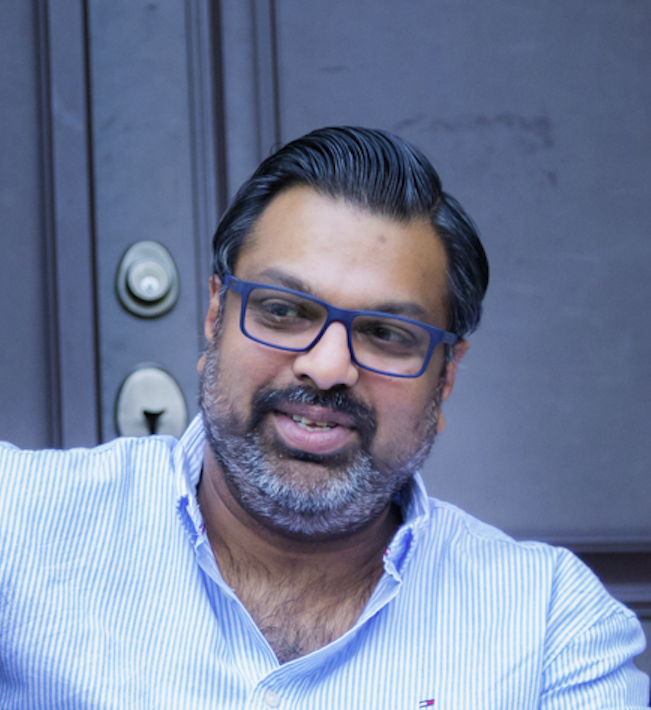
Sufi Khan Sulaiman
VP Technology & CTO with 25+ years building ecommerce platforms, enterprise systems, and AI solutions
Expertise across ecommerce strategy, cloud architecture, AI & machine learning, DevOps, and technology leadership. Led teams at FLIR Systems, Lorex Technology, 1c Platform, and Genetec.
More Articles
Explore the Full Portfolio
This is the complete portfolio of Sufi Khan Sulaiman, a technology leader specialising in B2B commerce and digital automation. Start from the Home page for the overview, then move through two decades of career experience across FLIR Systems, Lorex Technology, and 1c Platform, and the full catalogue of project case studies spanning headless commerce migrations, AI recommendation engines, and multi-channel fulfilment systems.
The skills and certifications page maps the technical and leadership capabilities behind the work, while the articles and the knowledge base break down the thinking into actionable frameworks. For hands-on learning, the tutorials and applications sections cover practical builds from front-end fundamentals to full-stack web apps.
For consulting engagement, the expertise page outlines service offerings, the ecommerce hub covers platform architecture and automation strategy, and the ecommerce guide (PDF) is a downloadable 55-page field manual. When you are ready to talk, the contact page is the direct line.