The 3C's Model: Finding Defensible Whitespace at the Intersection

The 3C's model, developed by Kenichi Ohmae, argues that sustainable strategy lives at the intersection of three forces: the customer, the company, and the competitors. A strategy that serves customers but ignores competitors is vulnerable. A strategy that beats competitors but serves no customer is pointless. A strategy that leverages company capability but serves no customer need is vanity.
The three C's
Customer: what do target customers need that is unmet? Company: what can you deliver that is hard to copy? Competitor: where are competitors weak or absent? The whitespace is where all three intersect.
How to apply it
1. Profile the target customer's unmet needs. 2. Assess your capability to meet them. 3. Map competitor strengths and gaps. 4. Position where all three intersect.
The assessment uses web and CRM signals: customer needs from search intent, support tickets, and behavioural analytics; company capability from logistics, data, and supplier relationships; competitor positioning from market share, pricing, and feature benchmarks.
A real example
At Cosmo Music, the intersection was B2B digital trade omnichannel. Customers (music retailers and schools) needed a single source for instruments, rentals, and repair with online ordering. The company had in-house logistics and supplier relationships. Competitors were weak online, still operating through catalogues and phone orders. The whitespace was a B2B digital trade omnichannel platform the company could own.
Where it directs investment
The 3C's directs opex and resources toward defensible whitespace rather than crowded me-too work. In technology, it asks whether the company's real edge is its data, its platform, or its distribution, then concentrates dev and tech-debt investment behind that edge. For inventory, it shapes the assortment: customer demand defines what to stock, company capability defines what can be sourced profitably, and competitor positioning defines where margin is defensible.
The living map
The 3C's is not a one-time exercise. Competitors move, customer needs shift, and capabilities erode. A living map refreshed each planning cycle keeps investment continuously re-pointed toward the whitespace where all three still intersect.
Related Articles
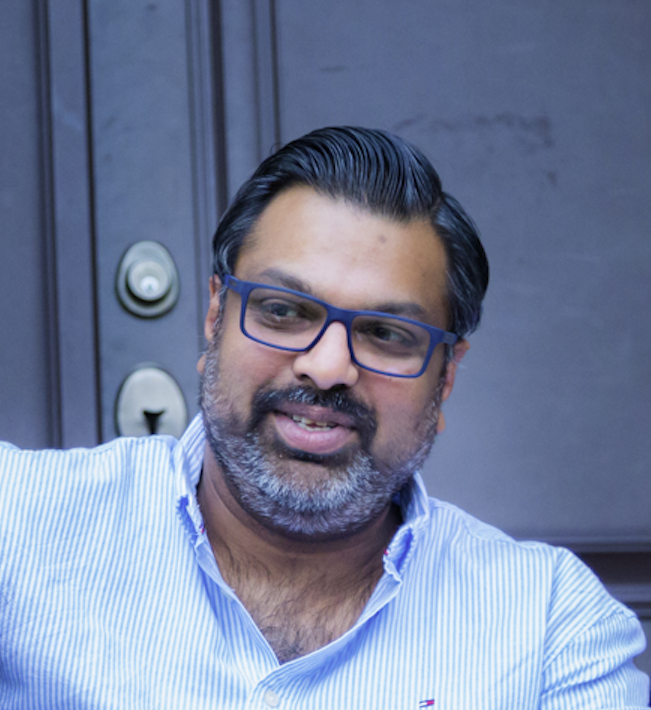
Sufi Khan Sulaiman
VP Technology & CTO with 25+ years building ecommerce platforms, enterprise systems, and AI solutions
Expertise across ecommerce strategy, cloud architecture, AI & machine learning, DevOps, and technology leadership. Led teams at FLIR Systems, Lorex Technology, 1c Platform, and Genetec.
More Articles
Explore the Full Portfolio
This is the complete portfolio of Sufi Khan Sulaiman, a technology leader specialising in B2B commerce and digital automation. Start from the Home page for the overview, then move through two decades of career experience across FLIR Systems, Lorex Technology, and 1c Platform, and the full catalogue of project case studies spanning headless commerce migrations, AI recommendation engines, and multi-channel fulfilment systems.
The skills and certifications page maps the technical and leadership capabilities behind the work, while the articles and the knowledge base break down the thinking into actionable frameworks. For hands-on learning, the tutorials and applications sections cover practical builds from front-end fundamentals to full-stack web apps.
For consulting engagement, the expertise page outlines service offerings, the ecommerce hub covers platform architecture and automation strategy, and the ecommerce guide (PDF) is a downloadable 55-page field manual. When you are ready to talk, the contact page is the direct line.